
Canadian restaurants are moving away from single‑use plastics toward fibre‑based compostables, reusable container programmes, and minimalist designs that cut material use. The biggest shift is a demand for packaging that actually breaks down in municipal composting facilities, not just in industrial labs, paired with clear, honest labelling. The conversation around food packaging in Canada has changed dramatically. It’s no longer just about whether a container can hold hot soup without leaking. Operators now ask where that container will end up a week after the meal is finished, and whether it will truly return to the soil or sit in a landfill for generations. This deeper thinking is driving several clear trends that any restaurant, café, or catering business needs to understand. First, plant‑fibre materials are taking over. Bagasse (sugarcane fibre), wheat straw, and moulded pulp are replacing expanded polystyrene and black plastic in everything from clamshells to bowls. These materials look earthy and natural, which aligns with the aesthetic many Canadian diners now expect from eco‑conscious brands. More importantly, they are compostable in a growing number of municipal programmes, especially in British Columbia, Ontario, and Quebec, where organics collection is expanding. Second, minimalist packaging is gaining traction. Instead of over‑engineered boxes with multiple layers, restaurants are choosing single‑wall containers, unbleached paper wraps, and even edible or dissolvable films. This reduces both material costs and waste volume. It also simplifies the customer’s disposal experience, one bin, one material, no confusion. Third, reusable container systems are popping up in urban centres. From deposit‑based takeout programmes to in‑house dishware for dine‑in, the “bring‑it‑back” model is carving out a niche. While not yet mainstream, these systems signal where consumer expectations are heading, and they complement a broader commitment to circular economy principles. Finally, transparency is the new baseline. Customers want to know what the packaging is made of, how to dispose of it, and whether the claims on the label are backed by certifications. This means operators need to choose suppliers who provide clear documentation, BPI certification, CMA‑W approval, or Bureau de normalisation du Québec (BNQ) compliance, and then pass that information along through simple icons or QR codes on the packaging itself.
2026 May 6th
Sustainable Food Packaging Trends 2026 Canada Guide
Sustainable Food Packaging Trends 2026 Canada Guide
The sustainable food-packaging choices Canadian restaurants are actually weighing in 2026, from bagasse to compostable paper.
Canadian foodservice packaging is moving toward compostable paper, bagasse, and clearly labelled fibre packs, under tighter rules on plastics and on what a 'compostable' claim can mean. The useful comparison is whether the container actually breaks down in your municipal stream, and whether it holds the food you serve. Certifications and PFAS questions belong on the same checklist.
What to remember
Compostable containers are rapidly becoming the norm for takeout and d
Compostable containers are rapidly becoming the norm for takeout and delivery across the country.
PFAS-free packaging is essential as health concerns and federal regula
PFAS-free packaging is essential as health concerns and federal regulations reshape the industry.
Bulk sourcing from Canadian suppliers slashes both per‑unit costs and
Bulk sourcing from Canadian suppliers slashes both per‑unit costs and your carbon footprint.
Plant‑based materials like bagasse and PLA now deliver performance tha
Plant‑based materials like bagasse and PLA now deliver performance that rivals traditional plastic.
What Are the Key Sustainable Food Packaging Trends for Canadian Restaurants?
How Do Compostable Food Containers Benefit Canadian Food Businesses?
Compostable containers help Canadian food businesses meet municipal organics diversion mandates, reduce landfill tipping fees, and align with customer values. When sourced in bulk, they can match the cost of traditional disposables while offering a genuine end‑of‑life solution that plastic simply cannot provide. For a busy restaurant, the day‑to‑day benefits of switching to compostable containers go far beyond a warm, green feeling. In many Canadian municipalities, organic waste is collected separately and processed into compost. If your takeout containers are certified compostable, they can go straight into the green bin along with food scraps. That means fewer black‑bag garbage pickups and, in some regions, lower commercial waste fees. Over a year, those savings can be meaningful. Operationally, compostable containers are now designed to handle the same demanding conditions as their plastic counterparts. Hot, saucy dishes? Modern bagasse clamshells hold their shape without getting soggy. Cold salads? PLA‑lined bowls resist leaks for hours. Even freezer and microwave performance has improved dramatically. This means kitchen staff don’t need to change how they pack orders, and customers get the same reliable experience they expect. There’s also a powerful marketing angle. Canadian diners, especially millennials and Gen Z, actively seek out businesses that demonstrate environmental responsibility. A simple note on your menu or a sticker on the container saying “Compostable, please place in green bin” can turn a routine takeout order into a brand‑building moment. It tells the customer you share their values, and that kind of alignment builds loyalty in a competitive market. From a supply chain perspective, buying compostable containers in bulk from a Canadian wholesaler keeps your costs predictable and your stockroom full. When you order pallet quantities, the per‑unit price drops significantly, often bringing it in line with what you’d pay for traditional plastic foam or clear PET containers. And because the products are shipped directly from our Calgary warehouse, you avoid cross‑border delays and surprise duties, keeping your operation running smoothly.
Why Is PFAS‑Free Food Packaging Gaining Importance in Canada?
PFAS (per‑ and polyfluoroalkyl substances) are a group of chemicals used to make packaging grease‑resistant, but they persist in the environment and the human body. Growing health evidence and pending Canadian regulations are pushing the food industry toward PFAS‑free alternatives that use plant‑based coatings or unbleached fibres instead. You may have seen “PFAS‑free” on packaging labels and wondered if it’s just another marketing buzzword. It isn’t. PFAS, often called “forever chemicals,” have been used for decades to create that oil‑proof barrier on takeout boxes, sandwich wraps, and bakery bags. The problem is they don’t break down, not in the compost pile, not in the soil, not in your body. Studies have linked long‑term exposure to immune system effects, hormone disruption, and certain cancers. As that science has solidified, governments around the world have started to act. In Canada, the federal government has signalled its intention to designate PFAS as a class of toxic substances under the Canadian Environmental Protection Act. While full bans are still being developed, forward‑thinking food businesses are already moving away from PFAS‑treated packaging. Major chains and independent cafés alike are demanding alternatives, and suppliers are responding with innovative solutions like water‑based grease barriers, bio‑wax coatings, and high‑density moulded fibre that naturally resists oil. Choosing PFAS‑free packaging isn’t just about future‑proofing against regulation. It’s about protecting your staff and customers right now. When hot, fatty foods sit against PFAS‑treated paper, small amounts of the chemicals can migrate into the meal. By switching to PFAS‑free containers, you eliminate that risk entirely. You also simplify your composting story: some industrial composters now reject loads that test positive for PFAS, so using clean, untreated fibre helps ensure your packaging actually gets turned into soil instead of being screened out and landfilled. For Canadian operators, the shift to PFAS‑free is especially urgent because our northern ecosystems are particularly vulnerable to persistent pollutants. Choosing packaging that doesn’t introduce forever chemicals into the environment is a tangible way to live up to the values your customers expect from a responsible local business.
What Regulations Are Shaping Eco‑Friendly Restaurant Packaging in Canada?
Federal single‑use plastic bans, provincial extended producer responsibility (EPR) programmes, and municipal organic waste bylaws are the three main regulatory forces driving the switch to sustainable packaging. Together, they are creating a patchwork of rules that make compostable and PFAS‑free materials the safest long‑term choice for any Canadian food business. Navigating Canadian packaging regulations can feel like aiming at a moving target, but the direction is unmistakable. The federal government’s Single‑use Plastics Prohibition Regulations have already banned items like plastic checkout bags, cutlery, and certain foodservice ware. While some hard‑to‑recycle plastic containers remain available, the writing is on the wall: the era of cheap, throwaway plastic is ending. At the provincial level, extended producer responsibility (EPR) programmes are shifting the cost of waste management onto producers and importers. In Ontario, for example, the Blue Box regulation now makes packaging producers financially responsible for the end‑of‑life management of their materials. For a restaurant owner, this means the suppliers you buy from are incentivised to offer packaging that is easily recyclable or compostable, because if it isn’t, they pay higher fees, which eventually trickle down to you. British Columbia, Quebec, and Manitoba are all moving in similar directions, with variations in what materials are accepted and how they must be labelled. Municipalities add another layer. Cities like Vancouver, Toronto, and Halifax have mandatory organic waste separation for businesses. If your takeout containers aren’t compostable, you may be forced to separate food from packaging before disposal, a messy, labour‑intensive step no kitchen wants. By choosing packaging that is accepted in your local green bin programme, you stay compliant and keep your operation efficient. The smartest approach for any multi‑location or growing Canadian food business is to standardise on packaging that meets the strictest rules you’re likely to face. Certified compostable, PFAS‑free, and clearly labelled containers check all the boxes across most jurisdictions, giving you one less thing to worry about as regulations continue to evolve.
How Can Canadian Restaurants Transition to Sustainable Packaging Without Disrupting Operations?
A smooth transition starts with auditing current packaging use, then phasing in sustainable alternatives one category at a time, clamshells first, then cups, then wraps. Working with a Canadian bulk supplier ensures consistent stock, and training staff on disposal messaging turns the switch into a customer‑facing win. Change can be intimidating, especially when your kitchen is already running at full tilt. But moving to eco‑friendly packaging doesn’t have to mean a chaotic overhaul. The most successful transitions happen in stages, with plenty of testing and staff input along the way. Begin with a simple audit. Walk through a typical service day and note every piece of disposable packaging you use: the breakfast wrap paper, the lunch clamshell, the soup cup and lid, the salad bowl, the utensil kit. Categorise them by material and volume. This gives you a clear picture of where your biggest impact, and your biggest spending, lies. Often, the clamshells and hinged containers account for the largest share, so tackling those first yields the fastest environmental and cost benefits. Next, order samples. Don’t commit to a full pallet without testing. Take a few units of a compostable clamshell, fill it with your sauciest dish, close it, stack it, and let it sit for the typical delivery time. Check for leaks, sogginess, and lid security. Do the same with hot and cold items. Involve your kitchen team, they’re the ones who will handle these containers hundreds of times a day, and their feedback on stackability, ease of filling, and lid fit is invaluable. Once you’ve chosen a winner, phase it in. Announce the change to your team, explain why you’re making it, and give clear instructions on what to tell customers. A simple script like “All our takeout containers are now fully compostable, just toss them in the green bin with your food scraps” turns a behind‑the‑scenes switch into a positive touchpoint. Update your menu, social media, and in‑store signage to reinforce the message. Finally, lock in your supply. Running out of packaging during a dinner rush is a nightmare. By purchasing in bulk from a Canadian supplier, you can keep a healthy buffer in your stockroom and reorder with confidence, knowing that lead times are short and the product is consistent. Bulk purchasing also smooths out price fluctuations, making your food costs more predictable.
Where Can You Source Bulk Sustainable Food Packaging in Canada?
Canadian food businesses can source compostable and PFAS‑free packaging in bulk from domestic wholesalers who stock pallet quantities and ship from local warehouses. This approach cuts shipping costs, avoids border delays, and ensures the packaging meets Canadian composting standards and labelling requirements.Finding a reliable source for sustainable packaging that won’t leave you hanging mid‑service is the final piece of the puzzle. While many international suppliers exist, there are distinct advantages to buying from a Canadian company that understands the local landscape. First, logistics are simpler. When you order from a supplier with inventory stored in Canada, your shipments don’t get stuck in customs or hit with unexpected import fees. You can receive full pallets within days, not weeks. For restaurants in Western Canada, having a warehouse in Calgary means ground shipping that’s both fast and affordable. In fact, many of our customers appreciate that their orders are shipped directly from our Calgary warehouse, arriving on time and in perfect condition. Second, Canadian suppliers are more likely to carry products that align with our specific regulatory and composting infrastructure. A clamshell that’s certified compostable in the United States may not be accepted by Metro Vancouver’s organics programme if it lacks the right certification. When you buy from a knowledgeable domestic partner, you can ask those questions and get straight answers, along with documentation to back up the claims. To help you compare the options available through our catalogue, here’s a quick look at three bulk solutions designed for different types of food businesses:
| Product | Best For | Key Feature | Packaging Type |
|---|---|---|---|
| our wholesale catalogue | Takeout‑heavy restaurants & cafés | Bagasse fibre, microwave & freezer safe | Clamshells, bowls, compartment trays |
| our wholesale catalogue | Full‑service kitchens & caterers | PFAS‑free, grease‑resistant coatings | Wraps, boxes, deli sheets, portion cups |
| our wholesale catalogue | Multi‑location chains & franchises | Pre‑configured pallet quantities for consistency | Mixed kits: containers, lids, utensils, bags |
Products Mentioned in This Article
our catalogue, Compostable clamshells, bowls, and trays made from bagasse fibre, ideal for takeout and delivery.
our catalogue, PFAS‑free wraps, boxes, and portion cups designed for full‑service kitchens and catering operations.
our catalogue, Pre‑configured bulk packaging kits that combine containers, lids, and utensils in pallet quantities for multi‑location consistency.
Compostable and fibre food packaging

Item ID 829381385069. Earth Pak eco disposable food containers #1, 450 per case.

Item ID 829381385076. Earth Pak eco disposable food containers #8, 450 per case.

Item ID 829381419528. iEco 8 by 8 inch hinged bagasse containers, 100 per case.
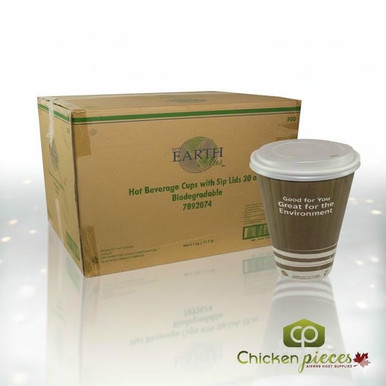
Item ID 6018124144160. Compostable paper cup with lid, 20 oz, 300 per case.
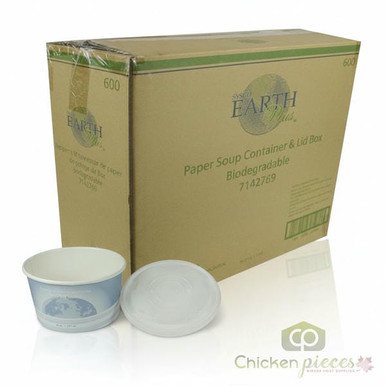
Item ID 6018112455438. Compostable paper bowl with lid, 8 oz, 300 per case.

Item ID 6018114727786. Compostable paper plate, 6 inch, 750 per case.

Item ID 829381390124. HOSPO chamber vacuum pouches, 3 mil, 250 per case.

Item ID 7425102267220. Pizza slice box, white clay-coated clamshell, 400 per case.
Cases ship to Canada and the US at live UPS rates. Pallets and frozen products ship within Canada only. Free shipping over $199 CAD is Canada only.
Frequently asked questions
Can compostable packaging go in the green bin?
Only if your city accepts it. Many Canadian green-bin programs, including Toronto's and Calgary's, don't take compostable plastic containers or cutlery, because these don't break down fast enough in their facilities. Food-soiled paper and moulded fibre are accepted more widely. Check your municipal sorting guide and tell guests which bin to use.
Is cornstarch packaging compostable?
Usually only in industrial composting. Cornstarch packaging is typically PLA, a plastic made from fermented plant starch. It needs the sustained heat of a commercial facility to break down and won't compost properly in a backyard bin. It also isn't recyclable with regular plastics, so it only makes sense where local composters accept it.
What is the most sustainable food packaging?
There's no single winner. Reusable containers in a return program usually have the lowest footprint, followed by packaging made from recycled or plant fibre that your local system actually recycles or composts. For single-use takeout, uncoated or PFAS-free moulded fibre like bagasse and recyclable PP plastic are common practical picks in Canada.
What is sustainable packaging for food?
It's packaging designed to cut environmental impact across its whole life: made from renewable or recycled material, using less of it, and ending up recycled, composted or reused rather than landfilled. For food it also has to stay food-safe, hold heat and grease, and keep product fresh, so the best choice depends on the menu item.
What is biodegradable food packaging?
Packaging that microorganisms can break down over time. The term has no fixed timeline, so almost anything is biodegradable eventually, which is why Canada's Competition Bureau treats vague 'biodegradable' claims with caution. Compostable is the stronger term: certified products break down within a set time under defined composting conditions.
What are some eco-friendly packaging ideas for food?
Swap foam for moulded fibre clamshells, use paper or fibre bowls for soups and grain bowls, offer cutlery only on request, and size containers to the portion so there's less empty space. A fibre container like the iEco 8×8 bagasse clamshell handles hot, greasy food and is microwavable.
What are examples of sustainable packaging?
Common examples are moulded bagasse or wheat-straw containers, paper cups and bowls with compostable linings, recycled PET clamshells, kraft paper bags, wooden or fibre cutlery, and reusable deposit containers. Look for third-party certification on compostable items. Earth Plus 8 oz compostable bowls are one example for soups and sides.
Why is sustainable food packaging important?
Takeout packaging is one of the biggest sources of single-use waste, and much of it ends up in landfill or as litter. Better packaging cuts that waste, helps operators meet municipal and federal rules on single-use plastics, and matters to guests, many of whom now factor packaging into where they order from.
What is food grade packaging?
Food-grade packaging is made from materials that are safe for direct contact with food, so nothing harmful migrates into it under normal use, heat or storage. In Canada it has to meet the Food and Drugs Act, and suppliers can get a Health Canada letter of no objection for new materials. Our packaging range covers food-contact containers.
Why Partner With ChickenPieces
Chicken Pieces is a Calgary foodservice, hospitality and medical supply company founded in 2018, with about 20,000 products in the online catalogue. We supply pantry ingredients, medical nutrition and kitchen supplies. We are not a poultry or meat distributor.
Local Calgary Support
Real people in Calgary answer the phone and check labels, pack sizes and stock for you.
Wide Product Range
Pantry staples, medical nutrition, disposables, janitorial and concession supplies from one supplier.
No Membership Needed
Order by the case or the pallet with no membership and no minimum order quantity.
Food Safe Focus
We write for operators working under CFIA and Health Canada aware food safety plans.
Request Your Custom Quote Today
Call 1-833-462-8550 or shop chickenpieces.com. Browse Packaging and disposables for the full range.
Request a Quote