Beef Tallow vs Canola Oil for Food Service Operators

2026 Mar 12th

Beef Tallow vs Canola Oil for Food Service Operators

Canadian-Owned No MOQ Ships Canada-Wide Calgary Warehouse Food Safe Focus
Frying fats
CP

ChickenPieces Wholesale Desk

Chicken Pieces · Calgary, AB

Beef Tallow vs Canola Oil for Food Service Operators

How beef tallow and canola oil actually compare in a Canadian commercial fryer.

Quick Answer

Beef tallow and refined canola oil sit in a similar smoke-point range, around 400 F and above, so both can run a commercial fryer. The real choice is flavour, how the fat holds up through a service, and which format your fryer already handles. For most Canadian kitchens, the 20 kg tallow cube and a 17.3 L canola jug are the two packs to compare.

Compare

Beef Tallow vs Canola Oil: Which Wins for Canadian Commercial Kitchens?

Key Takeaways

  • Beef tallow and refined canola oil have similar smoke points (400 to 420°F vs 400 to 450°F), making both technically suitable for commercial deep frying, but tallow's saturated fat profile gives it significantly better stability and longevity in a commercial fryer.
  • Tallow produces a richer, more complex flavour in fried foods, particularly chips, fried chicken, and fish and chips, that neutral canola oil cannot replicate.
  • Canola oil is Canada's dominant commercial frying fat and has the advantage of a neutral flavour, wide availability, and a well-established supply chain.
  • The choice between tallow and canola is not binary: many Canadian restaurants run a dedicated tallow fryer for premium items alongside a canola fryer for neutral-flavour applications.
  • ChickenPieces.com supplies both rendered beef tallow and bulk shortening for Canadian food service operators, shipped Canada-wide from Calgary.

The method

How Do Beef Tallow and Canola Oil Actually Compare for Commercial Frying?

Beef tallow and refined canola oil have comparable smoke points (400 to 420°F vs 400 to 450°F), making both technically suitable for commercial deep frying at standard temperatures of 350 to 375°F. The key differences are in flavour (tallow is rich and savoury; canola is neutral), fat stability under prolonged heat (tallow is superior due to its saturated fat profile), and operational handling (canola is liquid at room temperature; tallow is solid).

The table below provides a direct, data-driven comparison of the two fats across the dimensions that matter most for commercial kitchen decision-making:

Property Beef Tallow Refined Canola Oil
Smoke Point 400 to 420°F (204 to 215°C) 400 to 450°F (204 to 232°C)
Saturated Fat ~50% ~7%
Monounsaturated Fat ~42% ~63%
Polyunsaturated Fat ~4% ~28%
Flavour Profile Rich, savoury, beefy Neutral
State at Room Temperature Solid Liquid
Fryer Longevity Excellent (3 to 5 days) Good (1 to 3 days)
Oxidative Stability Excellent Good
Allergen Considerations Beef (animal fat) None (plant-based)
Vegetarian/Vegan Suitability No Yes
Canadian Provenance Yes (Canadian beef) Yes (Canadian canola)
Typical Commercial Format Blocks, jars, pails 8L, 16L, 20L jugs

Both fats are genuinely Canadian in origin, Canada is one of the world's largest beef producers and the world's largest canola producer. The choice between them is not a question of supporting Canadian agriculture; it is a question of what your kitchen needs.


Guide

Which Fat Lasts Longer in a Commercial Fryer, Tallow or Canola?

Beef tallow lasts significantly longer in a commercial fryer than canola oil under equivalent conditions. The reason is chemistry: tallow is approximately 50% saturated fat, which has no double bonds that can oxidise under heat. Canola oil is approximately 28% polyunsaturated fat, which degrades more quickly at frying temperatures. A well-maintained tallow fryer can run 3 to 5 days between oil changes; a canola fryer typically requires changing every 1 to 3 days at comparable volume.

This difference has real operational and economic implications. Fat changes are time-consuming, require disposal of used oil, and represent a direct input cost. If your fryer runs 8 hours per day at high volume, the difference between a 2-day and a 4-day fat life represents a significant reduction in both labour and material costs over the course of a month.

The stability advantage of tallow also affects food quality. As vegetable oils degrade under heat, they produce polar compounds, aldehydes, and other oxidation products that affect both the flavour of the finished food and the colour of the fat. Dark, degraded oil produces inferior fried food, greasy, off-flavoured, and poorly coloured. Tallow degrades more slowly, meaning the quality of your fried food remains more consistent across a longer operating period.

The caveat is that tallow still requires proper maintenance. Daily filtering is essential, food particles that remain in the fat accelerate degradation regardless of fat type. Temperature control matters too: consistently overheating tallow above 400°F will shorten its fryer life significantly. Proper fryer management is the prerequisite for getting the full stability benefit of tallow.


Guide

Does the Flavour Difference Between Tallow and Canola Oil Matter for Canadian Restaurants?

The flavour difference between tallow and canola oil is significant and commercially meaningful for most fried foods. Tallow produces a richer, more complex flavour, particularly in chips, fried chicken, fish and chips, and pastry, through its interaction with the Maillard reaction and its fatty acid profile. For restaurants where flavour differentiation is a competitive advantage, this difference matters. For operations where a neutral flavour is required or preferred, canola remains the better choice.

The Maillard reaction, the chemical process responsible for browning and flavour development in cooked foods, is influenced by the fat used for cooking. Saturated fats like tallow interact differently with proteins and sugars during high-heat cooking than polyunsaturated oils, producing a more complex flavour profile in the finished food. This is not a subtle difference. Chefs who have switched from canola to tallow for their chips or fried chicken consistently report that customers notice and comment on the flavour improvement.

For Canadian restaurants in the premium, farm-to-table, or traditional cooking space, the ability to say "we fry in beef tallow" is increasingly a meaningful differentiator. Consumer surveys consistently show that a growing segment of Canadian diners is actively seeking out restaurants that cook in natural animal fats rather than processed seed oils. This is a real commercial opportunity for operators who can credibly make that claim.

The neutral flavour of canola oil, conversely, is an advantage in certain applications. For frying foods where you do not want any fat flavour to come through, tempura, certain Asian-style fried dishes, doughnuts with delicate flavour profiles, a neutral oil is the better choice. Many Canadian restaurants run both: a dedicated tallow fryer for premium items and a canola fryer for applications where neutrality is preferred.


The details

What Are the Practical Operational Differences Between Running a Tallow Fryer and a Canola Fryer?

The main operational differences between a tallow fryer and a canola fryer are: tallow is solid at room temperature and requires a longer heat-up time before service; tallow produces more pronounced flavour transfer between products; and tallow requires the same daily filtering as any commercial frying fat but will typically last longer between full oil changes. Neither fat requires special equipment, standard commercial fryers work with both.

The solid-at-room-temperature property of tallow is the most significant operational difference. When you arrive for morning prep, your tallow fryer will contain a solid block of fat. You need to turn the fryer on early enough for the fat to melt and reach operating temperature before service begins, typically an additional 15 to 20 minutes compared to a liquid oil fryer. This is a minor inconvenience that quickly becomes part of the routine.

Flavour transfer is a more significant consideration. Tallow has a pronounced flavour that transfers readily between products. A fryer used for fish will impart a fishy note to anything else fried in the same fat. For this reason, dedicated fryers for different product categories are best practice when using tallow, one fryer for chips, one for fish, one for chicken, and so on. This is good practice with any fat, but it is more important with tallow than with neutral canola oil.

Used tallow disposal follows the same protocols as used vegetable oil in most Canadian jurisdictions. Commercial kitchens are required to dispose of used cooking oil through a licensed grease trap service or recycling programme. Used tallow is actually a valuable feedstock for biodiesel and other industrial applications, and many grease collection services will collect it alongside vegetable oil.


Guide

Which Fat Is the Better Choice for Your Canadian Kitchen?

For Canadian restaurants where flavour is a primary differentiator and fried foods are a significant part of the menu, beef tallow is the superior choice for dedicated frying applications. For operations that require a neutral flavour, serve vegetarian or vegan customers, or need the simplest possible supply chain, canola oil remains the practical default. The optimal solution for many Canadian restaurants is a dual-fat approach: tallow for premium fried items, canola or blended shortening for neutral applications.

The decision framework is straightforward. If your restaurant's identity is built around traditional cooking, premium ingredients, and flavour-forward food, and if your customers are the type who care about what fat their chips are fried in, tallow is the right choice. If you run a high-volume operation where consistency, simplicity, and cost control are the primary considerations, canola oil is a perfectly good fat and there is no compelling reason to switch.

For most Canadian restaurants, the answer is somewhere in between. A dedicated tallow fryer for chips and fried chicken, alongside a canola or blended shortening fryer for other applications, gives you the flavour advantage where it matters most without the operational complexity of converting your entire kitchen to tallow.

The Sysco Canadian Beef Tallow 20 kg cube is the foodservice format for Canadian restaurants that want to run tallow in a commercial fryer, Item ID 6018129079078, not a retail jar. View the 20 kg beef tallow.

For operations that need a reliable bulk neutral fat alongside their tallow, the SUNSPUN Blended Shortening 20 kg/44lbs is a Canadian food service staple that works well for baking, neutral frying, and applications where a beefy flavour is not appropriate. Check Live Availability.


Shop the Range

Beef tallow and frying oils

Sysco Canadian Beef Tallow Shortening Cube - Bulk Food Service, 20kg/44lbs

Item ID 6018129079078. 20 kg commercial cube for foodservice frying.

Gordon Beef Blended Tallow Frying Shortening 20kg Cube

Item ID 6010856939977. 20 kg blended tallow shortening cube for high-volume frying.

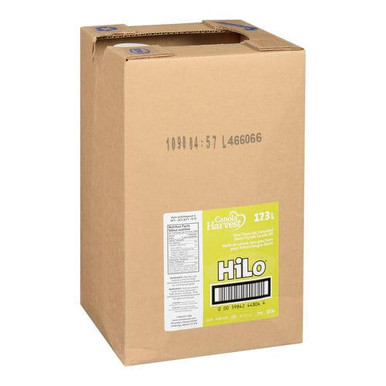
Canbra Foods HiLo Canola Oil - Premium Frying Oil Blend - 17.3LT (15.5 kg / 34.2 lbs) - Canadian Made

Item ID 6018149050071. 17.3 L high-oleic canola frying oil, made in Canada.

Sysco Classic Creamy Frying Oil - Premium - 16LT - 35.2 LBS

Item ID 6018121512535. 16 L creamy frying oil for high-volume fryers.

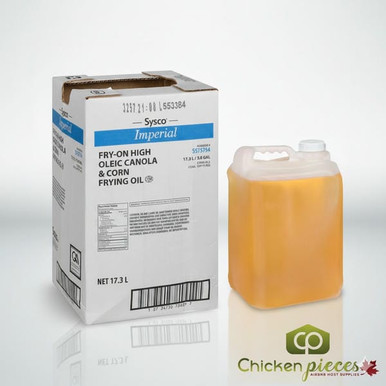
Sysco Imperial Fry-On Shortening - Non-Hydrogenated Canola Oil, 17.3 LT - 38.1 LBS

Item ID 6018109238280. 17.3 L non-hydrogenated canola frying shortening.

Bunge Vegetable Frying Shortening, Non Hydrogenated, Ca | 20KG/Unit, 1 Unit/Case

Item ID 6010857116117. 20 kg non-hydrogenated vegetable frying shortening.

The 20 kg cube ships from Calgary. Cases ship to Canada and the United States at live carrier rates. Pallet freight stays within Canada and usually needs a loading dock.

FAQ

Frequently asked questions

Can you mix beef tallow and canola oil for frying?

Yes. Plenty of fry stations run a blend, and blended tallow shortening is sold for exactly that job. Canola thins the fat and softens the beef flavour, while tallow adds crispness and slower breakdown. Melt them together, keep the ratio the same at every top-up and filter daily. A blended tallow cube arrives pre-mixed.

How many calories are in beef tallow vs canola oil?

Almost the same. Both are close to pure fat, so each carries about 9 calories per gram, roughly 115–125 calories per tablespoon. The difference is the type of fat, not the amount. Tallow is around half saturated fat, while canola is low in saturated fat and high in monounsaturated fat, which is why the health comparison favours canola.

Does beef tallow or canola oil have a higher smoke point?

Refined canola usually sits a little higher, around 204–230°C (400–450°F), while beef tallow is usually quoted near 205°C (400°F). Both are well above the 175–190°C (350–375°F) most fryers run at. The bigger difference is stability: tallow's saturated fat resists breakdown, so it tends to hold up longer between oil changes.

Is beef tallow healthier than canola oil?

Most nutrition research says no. Beef tallow is roughly half saturated fat, while canola is mostly unsaturated fat with a little omega-3. Canada's Food Guide and Harvard's School of Public Health both favour unsaturated oils for heart health. Tallow's real strengths are flavour, crispness and fry life, so keep menu claims about taste rather than health.

Can I replace vegetable oil with beef tallow?

Yes. For frying, roasting and searing it swaps in about one for one by weight once melted. Expect a beefier flavour and a crisper crust. Two catches in a commercial kitchen: tallow is solid at room temperature, so it has to be melted before it works in a fryer, and anything cooked in it is no longer vegetarian or vegan.

Why avoid beef tallow?

The usual reasons are saturated fat, guest diets and handling. Tallow is about half saturated fat, it rules fried items out for vegetarian and vegan guests, and it may not meet halal or kosher rules. It also sets hard in drains and on cold surfaces, so grease traps need attention. Flavour and fry life are why operators still use it.

Beef tallow vs canola oil for frying: which is better?

It depends on the menu. Tallow gives fries and battered fish a richer flavour and a crisper shell, and it holds up well under heavy use. Canola is neutral, liquid at room temperature and suits every diet. Many kitchens keep canola as the default fryer oil and save tallow, or a tallow blend, for signature fries.

Is beef tallow better than peanut oil for frying?

They do different jobs. Peanut oil is neutral, handles high heat and is mostly unsaturated, but peanut is a priority allergen in Canada, so many kitchens keep it out of shared fryers. Tallow brings beef flavour and stays stable through long frying, but it isn't vegetarian. For a public menu, canola or a tallow blend is the simpler choice.

Is beef tallow healthier than olive oil?

No. Olive oil is mostly monounsaturated fat and has the strongest research record of the common cooking fats for heart health, while tallow is roughly half saturated fat. Olive oil is rarely used in commercial deep fryers because of its flavour and cost per fill, so in practice tallow competes with canola blends in the fryer, not with olive oil.

Can you deep fry with beef tallow?

Yes. Tallow was the standard fryer fat in many fast-food kitchens until the 1990s. Melt the cube gently first, using the fryer's melt cycle if it has one, then run at the usual 175–190°C (350–375°F). Skim and filter daily and top up with fresh fat. This 20 kg beef tallow shortening cube is made for fryers.

Why Partner With ChickenPieces

Chicken Pieces is a Calgary foodservice, hospitality and medical supply company founded in 2018, with about 20,000 products in the online catalogue. We supply pantry ingredients, medical nutrition and kitchen supplies. We are not a poultry or meat distributor.

Local Calgary Support

Real people in Calgary answer the phone and check labels, pack sizes and stock for you.

Wide Product Range

Pantry staples, medical nutrition, disposables, janitorial and concession supplies from one supplier.

No Membership Needed

Order by the case or the pallet with no membership and no minimum order quantity.

Food Safe Focus

We write for operators working under CFIA and Health Canada aware food safety plans.

Request Your Custom Quote Today

Call 1-833-462-8550 or shop chickenpieces.com. Browse Shortenings and oils for the full range.

Request a Quote